Saturday, Feb. 21st
9:00 am – 4:30 pm
Utah Valley University,
800 W University Pkwy, Orem, UT
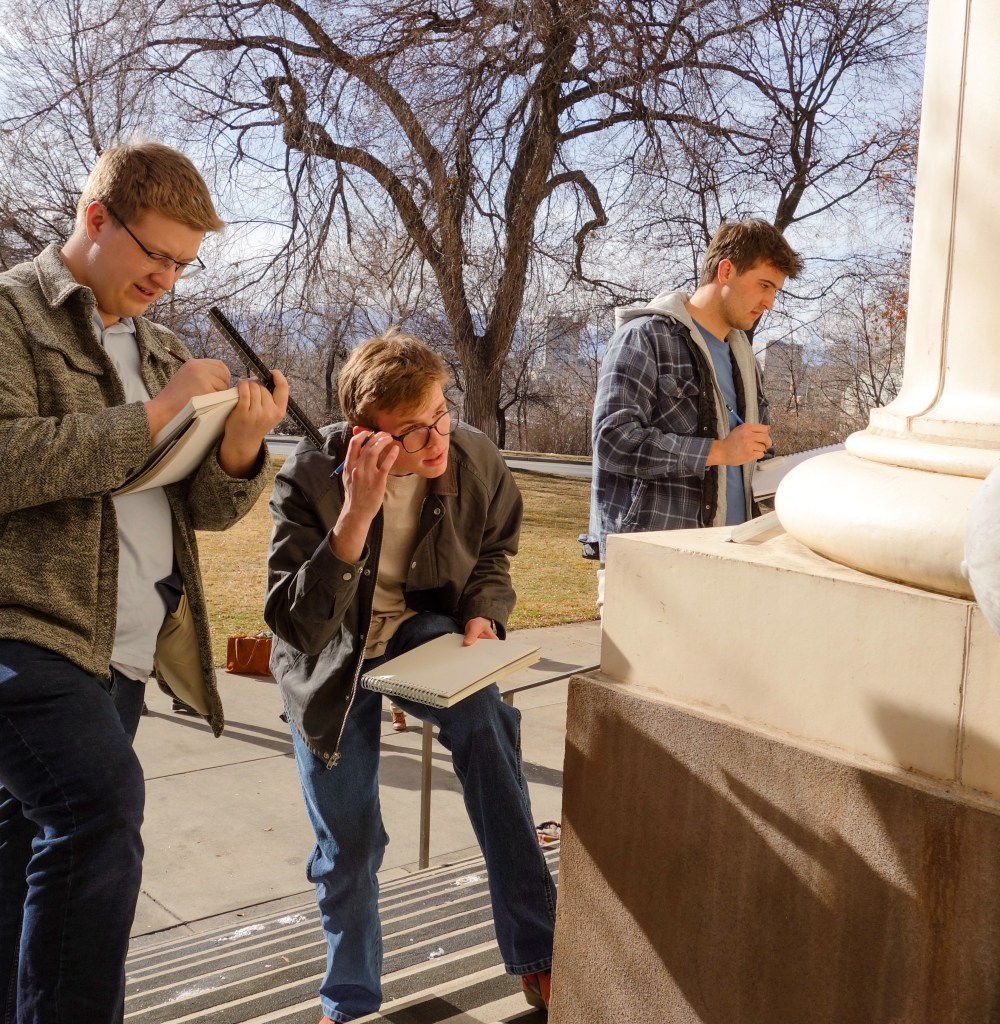
The ICAA Workshop in Classical Architecture introduced classical architecture as a living language to encourage literacy with the enduring forms which shape our built environment. The grammar, syntax, and proportional relationships of the classical canon were explored through freehand drawings of the classical orders and exercises that adapted the language to an architectural composition. The workshop kicked off with a series of short architectural case studies that highlighted the use of the classical tradition in the design of new buildings and places today.
WORKSHOP OVERVIEW
The Classical Language
- How to draw a block layout of the Tuscan Order to become familiar with the proportional relationships of the individual parts to the whole
- How to complete detailed drawings of the base, capital, and entablature to become acquainted with the nomenclature and role of the individual parts
- How to produce a drawing of an elevation of a Tuscan portico to explore syntax and compositional strategies
- How a canonical order may be explicit or implicit in a design, and how its elements can be progressively reduced while retaining its character and proportion
The Study of Precedents in Architectural Composition
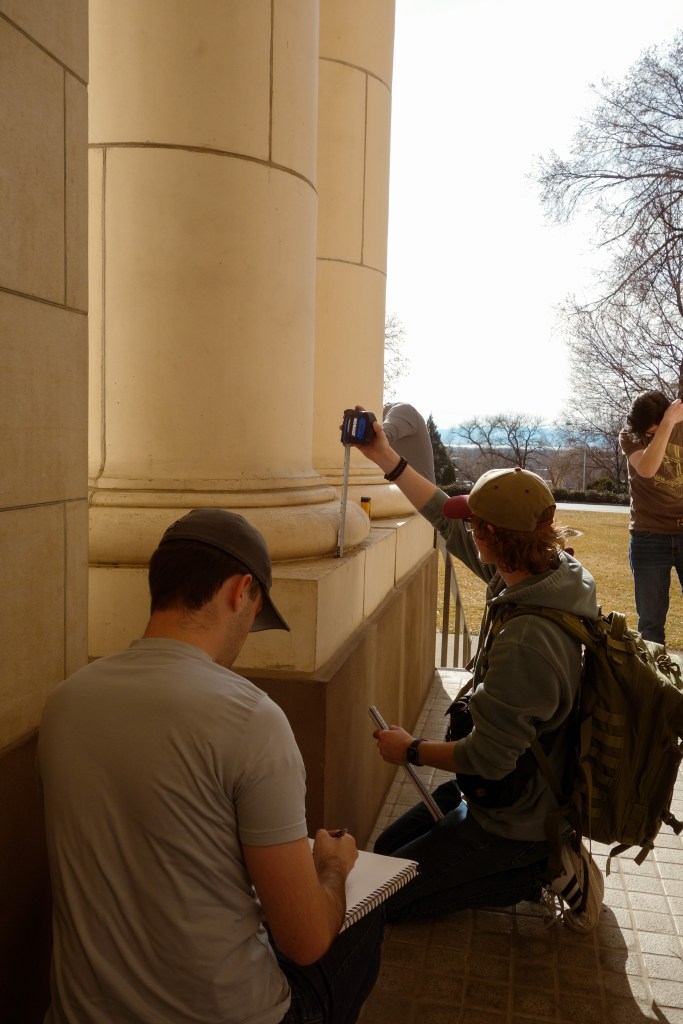
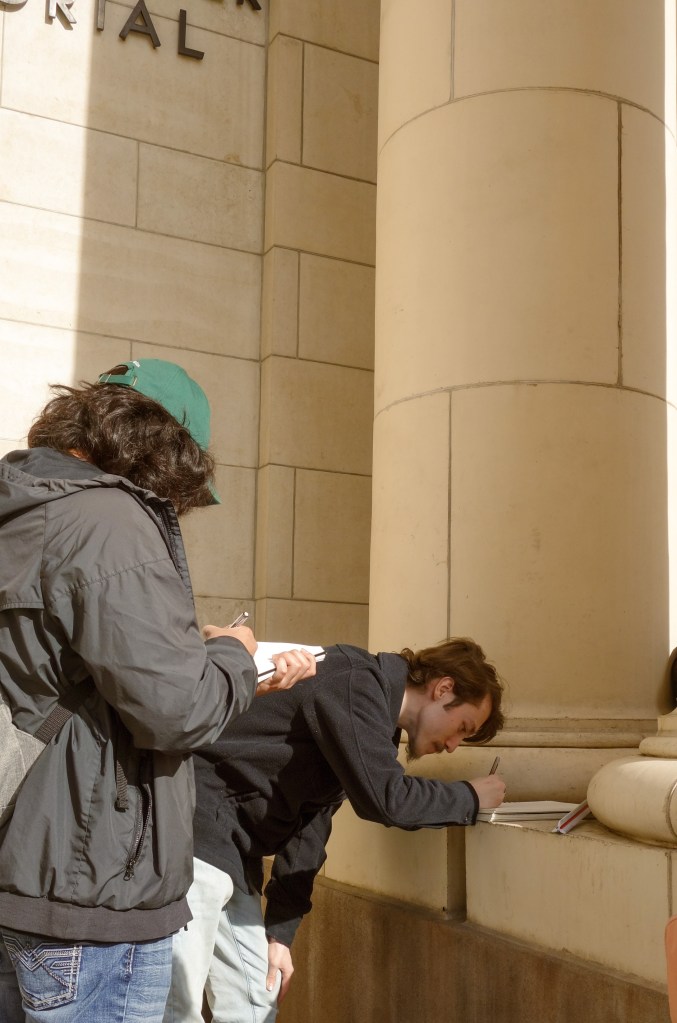
- The tradition and purpose of measured and analytical drawing in sketchbook.
- Techniques for measuring a precedent and accurately drawing to scale in a sketchbook
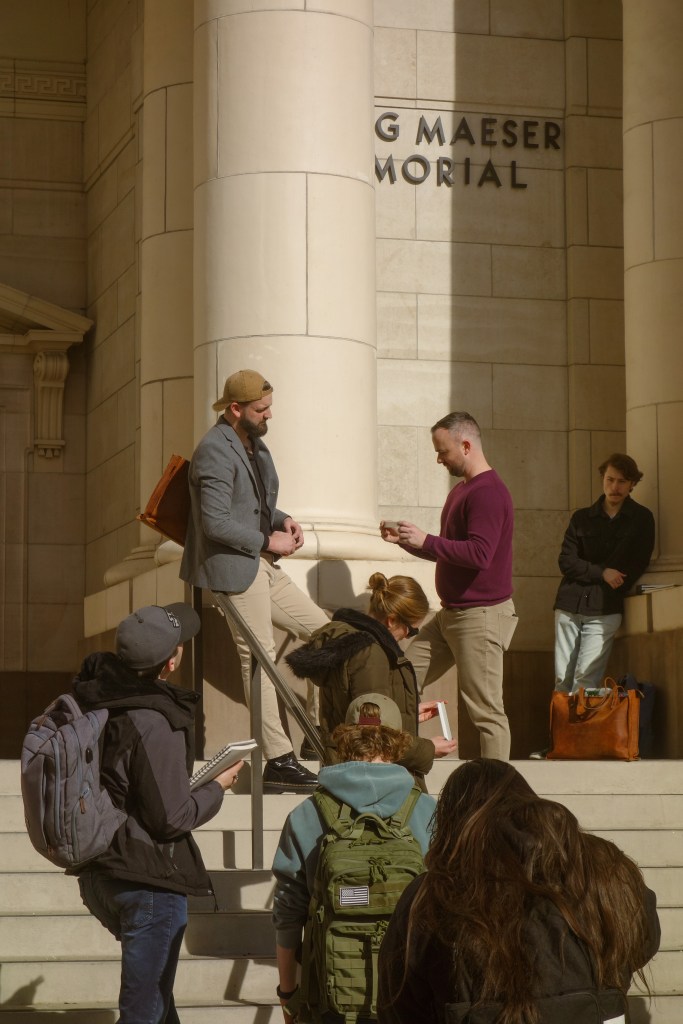
- Familiarity with local classical buildings and adaptions of the classical canon
- An appreciation for drawing as a means of instilling a sensibility for size, scale, proportion, and composition
This course provides seven hours toward the Certificate in Classical Architecture (Tuscan Order and Measured Drawing), and seven hours of AIA CES Learning Units | Elective.
INSTRUCTORS
Connor McKell Bingham – Pierre McKell Architects
Jacques Levet – Pierre McKell Architects
Serena Ettelson – Harrison Design
Matt Hayes – Building Culture
Christian Orme – Historical Concepts

 classicistutah.org